14 Ways to Improve Your Conversion Rate in 2026




TL;DR: Fix your page speed and forms first. Then close the gap between form submission and first response. Teams that add SMS, AI agents, and CRM-connected follow-up to their funnel convert more leads without adding headcount. This article gives you 14 specific ways to do it.
The biggest conversion rate gains for B2B teams in 2026 are not on the landing page. They are in the five minutes after the form is submitted. Most guides cover page speed, CTAs, and trust badges. Those matter, and they are tips 1 through 7 below. But the real gap is what happens next: how fast you respond, what channel you use, whether AI handles after-hours leads, and whether the CRM records the full conversation. Tips 8 through 14 cover that layer, and it is where most of your competitors are still losing deals.
Every tip below is something a sales or marketing team at a small or mid-size business can act on within a week.
What is a conversion rate (and why most teams measure it wrong)
Conversion rate = conversions / total visitors (or leads) x 100.
A website conversion rate uses visitors as the denominator. A sales conversion rate uses leads. The formula is the same. The denominator changes depending on what you are measuring.
The mistake most teams make is treating conversion rate as a single number for the entire funnel. A 3% site-wide conversion rate hides the fact that your pricing page converts at 8% while your blog converts at 0.4%. Measuring by page and by funnel step is the only way to find where the real leak sits.
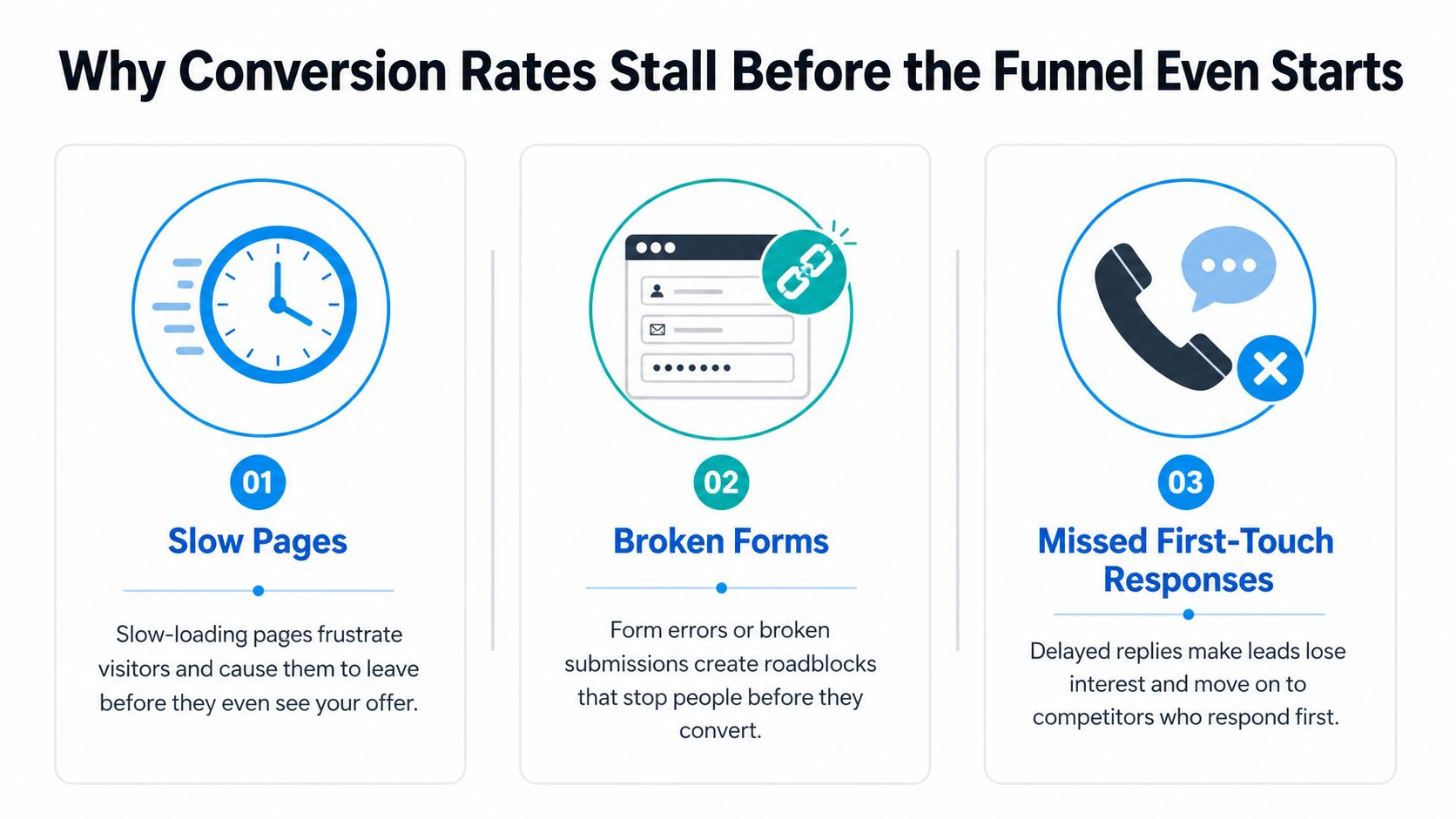
1. Fix your page speed before anything else
Google's widely cited mobile study found that when page load time rises from 1 second to 3 seconds, the probability of bounce increases by 32%. At 5 seconds, it jumps by 90%. If the bounce curve rises that sharply, the revenue problem is not abstract. Buyers leave while the page is still trying to load.
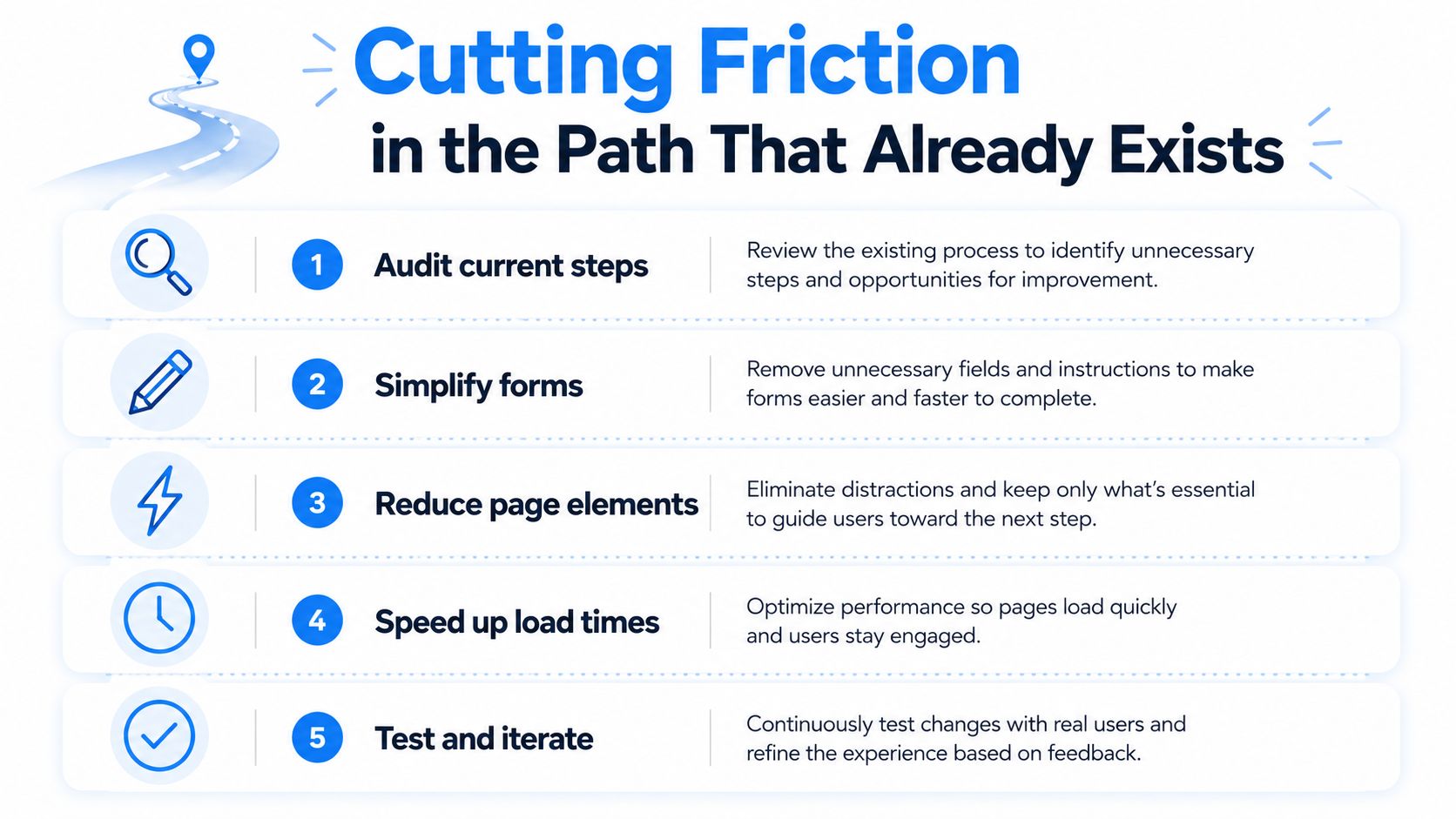
Start here because no amount of copy or design work helps if half your visitors never see the page. Compress images, enable caching, minify scripts, and use a CDN. Test with Google PageSpeed Insights before and after. The goal is under 2.5 seconds on mobile.
2. Cut form fields to the minimum that still qualifies
Every field you add to a form is a small tax on the visitor's patience. The question is not "what do we want to know?" It is "what is the least we need to start a conversation?"
For most B2B lead gen forms, that is name, email, and phone. If you need company size or use case, ask in the follow-up, not on the form. A shorter form with a faster follow-up will almost always outperform a longer form that collects more data upfront.
3. Write one clear CTA per page, not three
When a landing page has "Book a demo," "Download the guide," and "Start free trial" all competing for attention, visitors hesitate. Hesitation kills conversions.
Pick the one action that matters most for that page and make everything point toward it. If the page is for demo requests, the CTA is "Book a demo." The nav bar, the hero, and the footer all say the same thing. Secondary CTAs can live on other pages.
4. Add trust signals where the decision happens
Trust signals work best when they appear next to the action you want the visitor to take. A logo bar at the top of the page is fine, but a customer quote next to the demo form is better.
For B2B teams, the strongest trust signals are named customer results (not anonymous quotes), recognizable logos, review scores from G2 or Capterra, and compliance badges like SOC 2 or HIPAA. Put them within scrolling distance of the CTA, not buried on a separate page.
5. Run A/B tests on one variable at a time
The disciplined approach starts with a baseline by page and by segment. Then you pick one primary metric, form one testable hypothesis, and calculate sample size before launch. If you change the headline, the CTA color, and the form length in the same test, you will not know what moved the number.
Small samples can look decisive long before they are trustworthy. Run the test for at least a full business cycle before calling a winner.
6. Match the landing page to the ad or email that sent them there
If your ad says "See pricing for teams under 50 people" and the landing page opens with a generic hero about "business communication," the visitor has to re-orient. That gap costs conversions.
Match the headline, the offer, and the visual tone of the landing page to the source that sent the visitor. Paid campaigns should have dedicated landing pages, not a link to the homepage. The closer the match, the less friction between click and action.
7. Use social proof that names real results, not vague quotes
"Great product, highly recommend" does nothing. "We cut our average response time from 27 minutes to 21 minutes after switching" tells the visitor exactly what to expect.
The strongest social proof for B2B includes a named person, a named company, and a specific result. If you can pair it with a case study link, even better. Envoy Mortgage's response time improvement and ADTC's 4-hour-to-30-minute recruiting workflow reduction are the kind of proof points that move decisions.
8. Respond to new leads in under five minutes
A submitted form is not a conversion. It is a signal that the buyer is still interested. If nobody responds, the lead cools fast, and the opportunity shifts to the vendor who does. Research from the Harvard Business Review found that the first vendor to respond wins the majority of deals.
According to the 2026 State of SMS Benchmark Report, 57% of businesses send the first text to a new lead within 30 minutes. Only 14% have automated it under a minute. That gap is where faster response directly improves conversion rates.
The fix: connect your form to your CRM, trigger an automated first text within 60 seconds, and route the lead to the right rep. Speed-to-lead setup in Salesmsg covers the mechanics.
9. Add SMS to your lead response workflow
Email open rates for B2B outbound sit around 20% to 25%. SMS open rates are 98%. If your only follow-up channel is email, most of your follow-up is not being seen.
Adding SMS to the lead response workflow does not replace email. It makes sure the lead sees your first message. A text that says "Hey [first name], got your demo request. Does Thursday at 2pm work?" is direct, personal, and hard to miss.
For teams on HubSpot or Salesforce, Salesmsg connects SMS directly to the CRM so the text shows up in the contact timeline, not in a separate app. That means the rep who picks up the thread sees the full history. SMS marketing best practices covers the compliance and messaging basics.
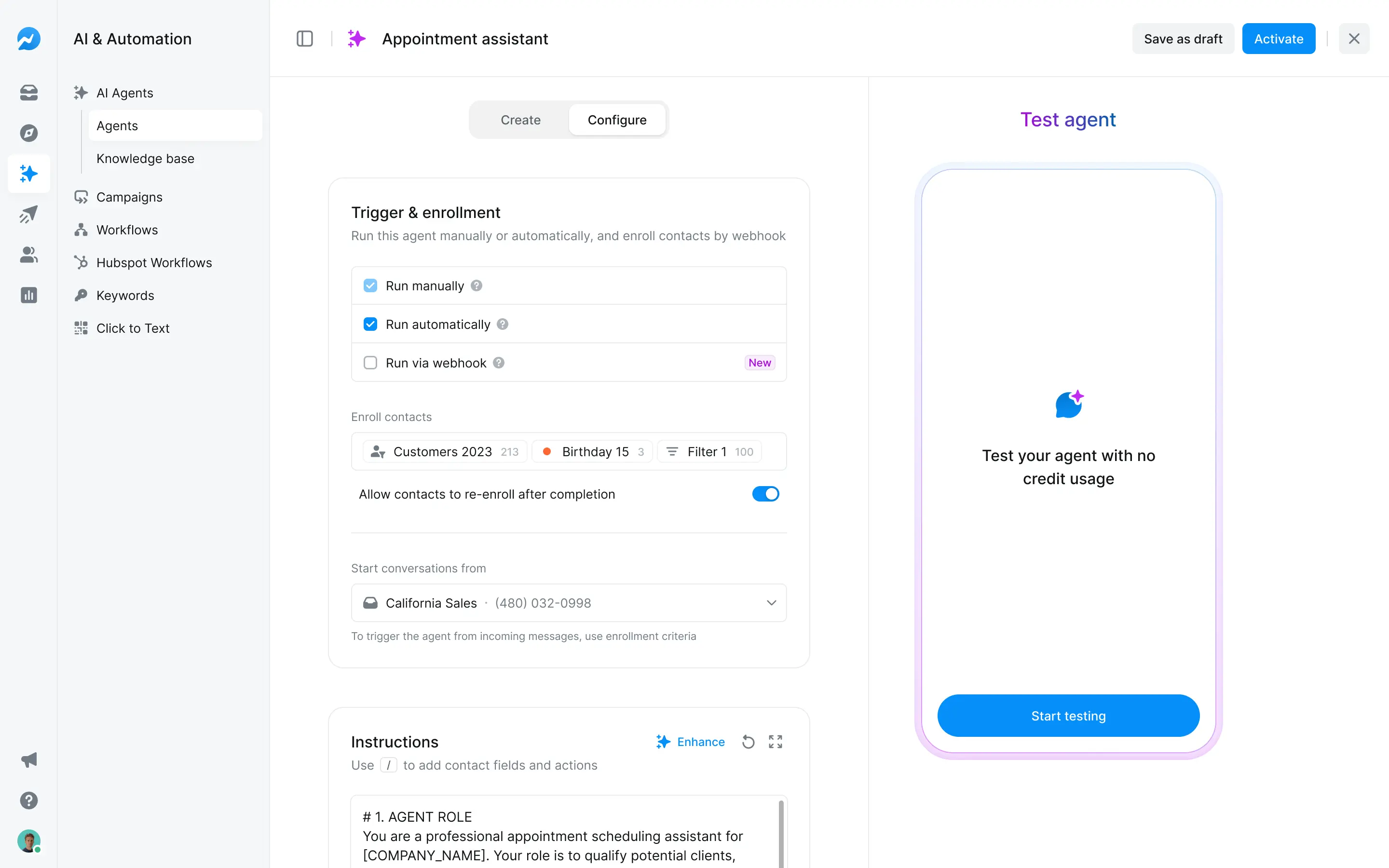
10. Let AI agents qualify and book while your team is offline
40% of inbound inquiries arrive outside business hours. If your team only responds during working hours, you are handing 4 out of 10 leads to the competitor who answers at 9pm.
AI agents on SMS can handle the initial qualification, answer common questions, and book appointments on the rep's calendar without human involvement. The 2026 Benchmark Report found an 88% lift in response rate when AI agents handle first-touch SMS compared to manual follow-up.
The key is that the AI agent does not pretend to be human. It handles the routine work (scheduling, confirming interest, collecting basic info) and routes anything complex to the rep the next morning. That keeps the conversation moving without making the lead wait. AI lead qualification over SMS explains how this works in practice.
11. Sequence follow-ups by behavior, not just time
Most follow-up cadences are built on time: day 1, day 3, day 7. That is a start, but the better sequences fire based on what the contact did, not just when they entered the list.
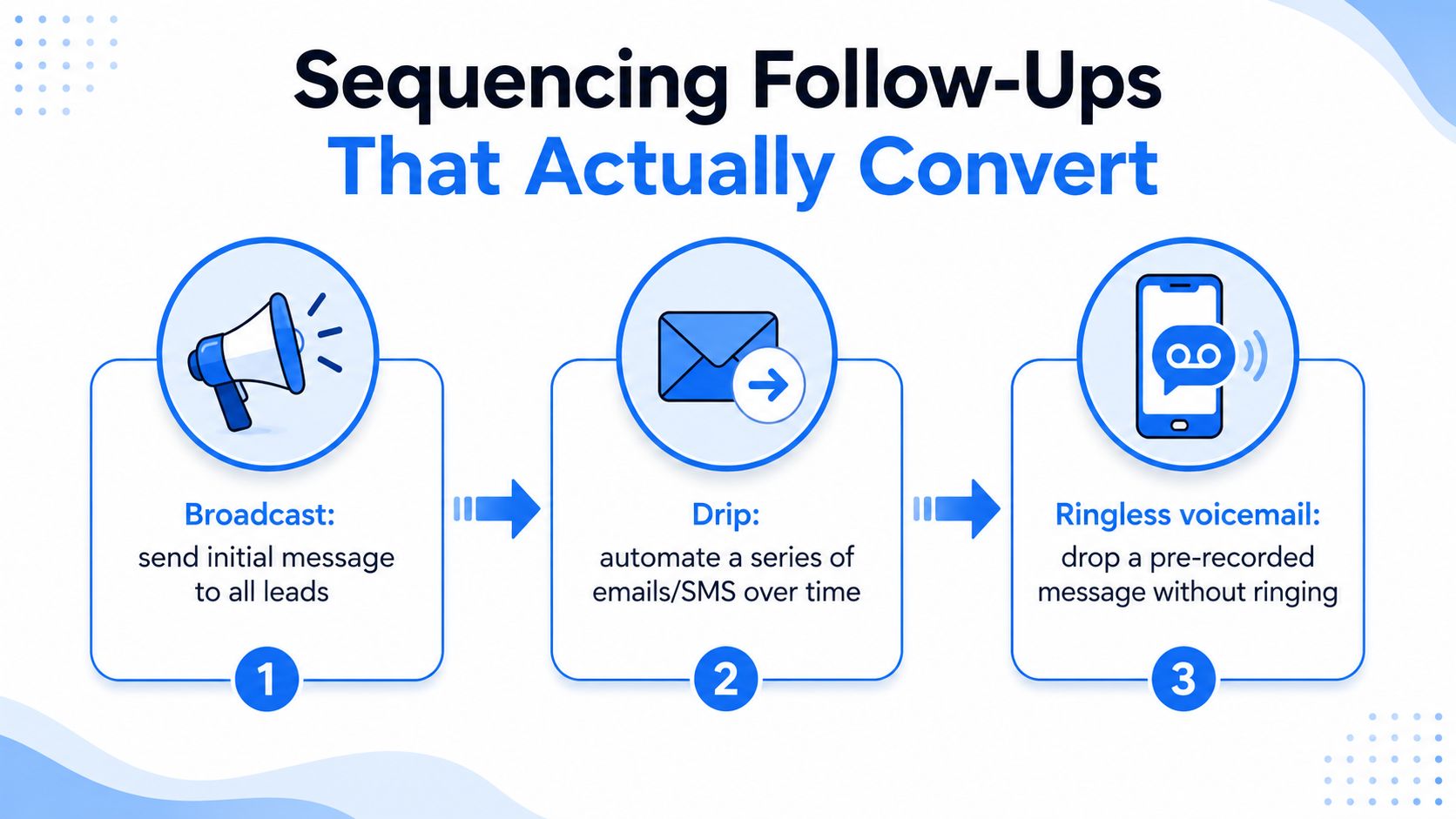
A practical cadence: day one, send a text. Day three, drop a ringless voicemail if the lead has not responded. Day seven, send a drip message with a useful asset. Day fourteen, re-engage only the segment that showed intent. That is much stronger than blasting the full list with the same message every time.
Dynamic send dates matter because not every contact moves on the same clock. A demo request should trigger a different cadence than a cold inquiry. Build around milestones, not just dates. These follow-up text examples are a useful starting point. For automation setup, SMS marketing automation covers the workflow side.
12. Connect every text and call to the CRM record
If your team sends texts from one app, makes calls from another, and logs notes in a third, the CRM record is incomplete. An incomplete record means the next rep who touches the lead has no context. That kills conversions.
The fix is to run text and voice from the same platform, and have that platform write every conversation back to HubSpot or Salesforce automatically. When the rep opens the contact record and sees the full text thread, the call transcript, and the AI summary in one timeline, they can pick up the conversation without asking the lead to repeat themselves.
This is where Salesmsg fits. SMS, MMS, calling, voicemail drops, and AI agent conversations all log to the CRM contact record. No copy-paste, no manual notes. HubSpot workflow examples shows how teams set up the triggers.
13. Pair texting with calling on the same number
When a lead receives a text from one number and a call from another, it feels disjointed. When both come from the same number, the experience is consistent and recognizable.
Salesmsg lets teams text and call from the same number, and both conversations log to the same CRM record. The lead sees one thread. The rep sees one timeline. If the text opens the door, the call closes it, and neither feels like it came from a different team.
14. Measure reply rate and meetings booked, not just clicks
Dashboards can make weak progress look busy. Opens and clicks tell you the message was seen, but they do not tell you whether the funnel is working. The metrics that forecast revenue are different.
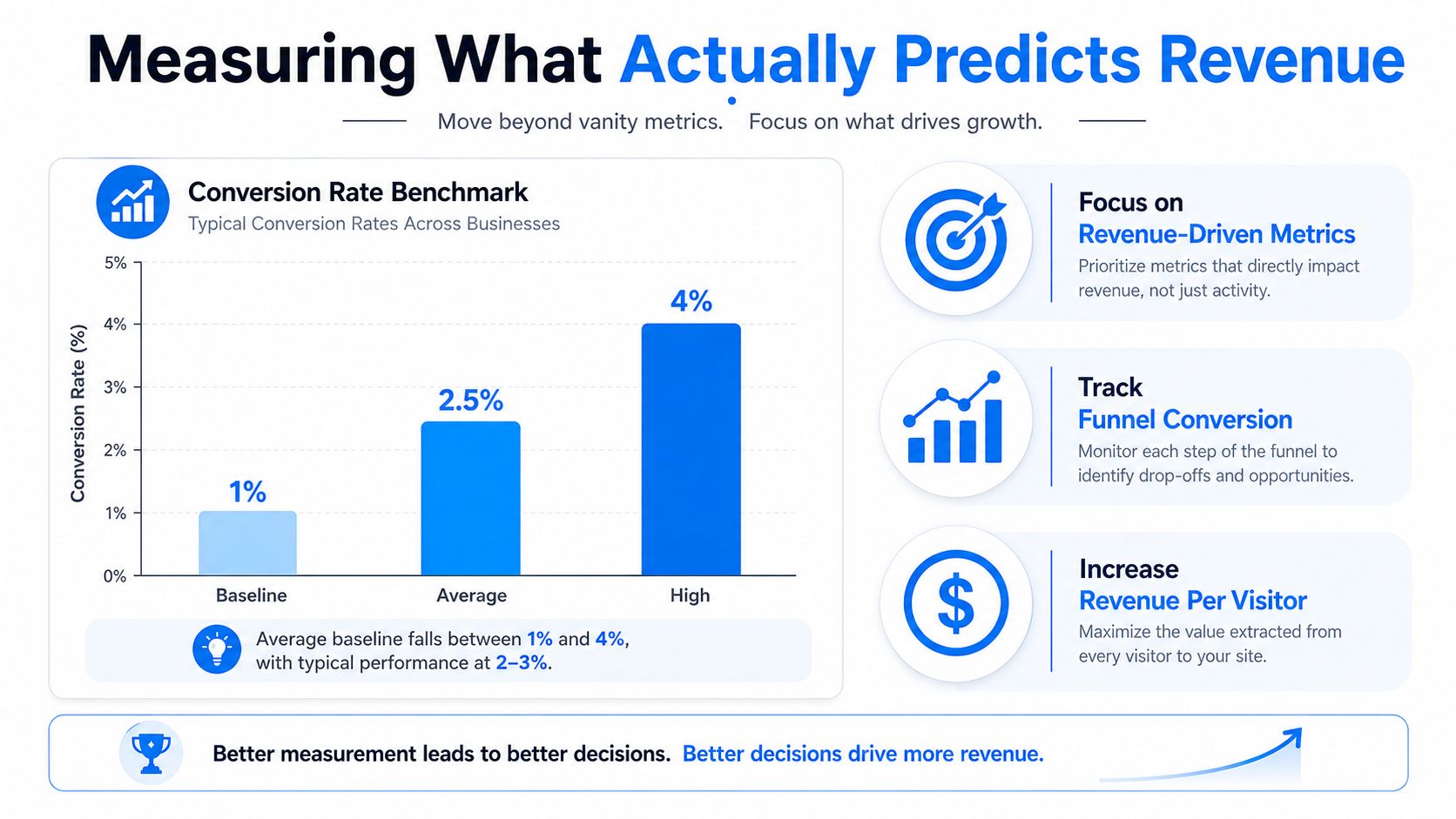
Focus on reply rate by segment (did the first touch start a conversation?), meetings booked by source (did interest turn into a next step?), qualified opportunities (did the meeting produce a real deal?), and revenue per outreach (what is the dollar return on the messaging investment?).
If you want a cleaner analytics layer, Salesmsg's actionable analytics keeps campaign performance visible inside the same workflow as the conversations. The value is that the team can act on the number while the trail is still fresh.
How to calculate your conversion rate
Conversion rate = (number of conversions / total number of visitors or leads) x 100
50 demo bookings from 2,000 visitors is a 2.5% conversion rate. 15 closed deals from 200 qualified leads is a 7.5% close rate. The formula works at every stage. Use it per page, per campaign, and per funnel step to find where the biggest drop-off happens.
What is a good conversion rate in 2026
Most B2B websites convert between 2% and 5% of visitors into leads. Paid traffic tends to convert higher because the visitor already showed intent. Organic traffic converts lower but at a higher volume.
The more useful question is whether your conversion rate is improving quarter over quarter. A team converting at 2.5% and trending up is in better shape than a team at 4% and flat. Measure your own baseline, improve it, and stop benchmarking against averages that do not share your traffic mix or funnel structure.
Your 30-day conversion rate rollout
The best rollout is boring in the right way. It starts with the basics, adds speed, then layers in automation and testing once the foundation is stable.
Week 1: Establish baselines by page and by funnel step. Fix the worst page-speed issues. Connect your messaging layer to HubSpot or Salesforce.
Week 2: Turn on instant SMS lead response. Set up AI inbox qualification for after-hours leads. Cut form fields to the minimum that still qualifies.
Week 3: Build the follow-up arcs: text on day 1, voicemail on day 3, drip on day 7, re-engage on day 14. Set up dynamic send-date campaigns based on lead behavior.
Week 4: Add A/B tests on the highest-traffic pages. Review the CRM timeline for leaks and wins. Adjust the sequence based on reply rate and meetings booked data.
Compliance is part of this work, not a separate legal footnote. TCPA opt-out, double opt-in, 10DLC registration, HIPAA-compliant messaging for healthcare, and SOC 2 controls for enterprise deals all matter when you are scaling SMS and voice workflows.
Start a free 14-day trial to set up the SMS and calling layer during week 1.
FAQ
What is a good conversion rate for a B2B website?
Most B2B websites convert between 2% and 5% of visitors into leads, depending on the industry and traffic source. The more useful question is whether your conversion rate is improving quarter over quarter, not whether it matches an industry average.
How do you calculate conversion rate?
Divide the number of conversions by the total number of visitors (or leads), then multiply by 100. For example, 50 demo bookings from 2,000 visitors is a 2.5% conversion rate. Use the same formula at each funnel stage to find where the biggest drop-off happens.
Does page speed really affect conversion rates?
Yes. Google's mobile study found that bounce probability increases 32% when load time goes from 1 to 3 seconds, and 90% at 5 seconds. Faster pages keep more visitors on the page long enough to take action.
Can SMS improve conversion rates for B2B teams?
Yes. According to the 2026 State of SMS Benchmark Report, SMS has a 98% open rate and teams using AI agents for SMS lead response see an 88% lift in reply rates. Salesmsg connects SMS and calling to HubSpot and Salesforce so every conversation logs automatically.
How fast should you respond to a new lead?
Under five minutes. The 2026 Benchmark Report found only 14% of businesses have automated their first text to fire in under a minute, which means most teams are losing leads to slower response, not to weaker products.
What is conversion rate optimization (CRO)?
CRO is the process of increasing the percentage of visitors or leads who take a desired action. Good CRO covers the full funnel, from page speed and form design to lead response and follow-up sequences.
Should I optimize for more traffic or better conversion rates?
Start with conversion rate. Doubling your conversion rate has the same revenue effect as doubling your traffic, but it usually costs less and takes less time. Fix the funnel leaks first, then invest in traffic.
If you want a conversion system that goes beyond the landing page and into the response layer, Salesmsg gives revenue teams SMS, MMS, voice, shared inboxes, and CRM automation in one workflow. Book a demo to see how it works.
_6%20confirmation%20call%20scripts%20to%20cut%20no-shows%20(2026%20guide).webp)

_What%20is%20conversational%20SMS.webp)